I use ChatGPT on my phone to help manage my strength training. I choose a goal, follow a program for a training cycle, and record what I do. At the end of the cycle, we look at the evidence together and decide what comes next.
The goal is mine. I might want to get stronger, build muscle, get leaner, or focus on how I look. I can discuss a long-term ambition, then choose the focus and length of the next cycle. That gives us something specific to work toward and a point at which to review it.
I use Strength MCP to connect the conversation to my training. It holds two things: my program, written in ordinary language, and the history of what I actually did. ChatGPT can read both and save changes to the program when I ask.
The program can describe an established routine, such as Starting Strength or a Barbell Medicine program, or something we put together in conversation. I can specify training days, exercises, sets, reps, and rules for increasing the weight. Those instructions stay with the program, ready for the next session.
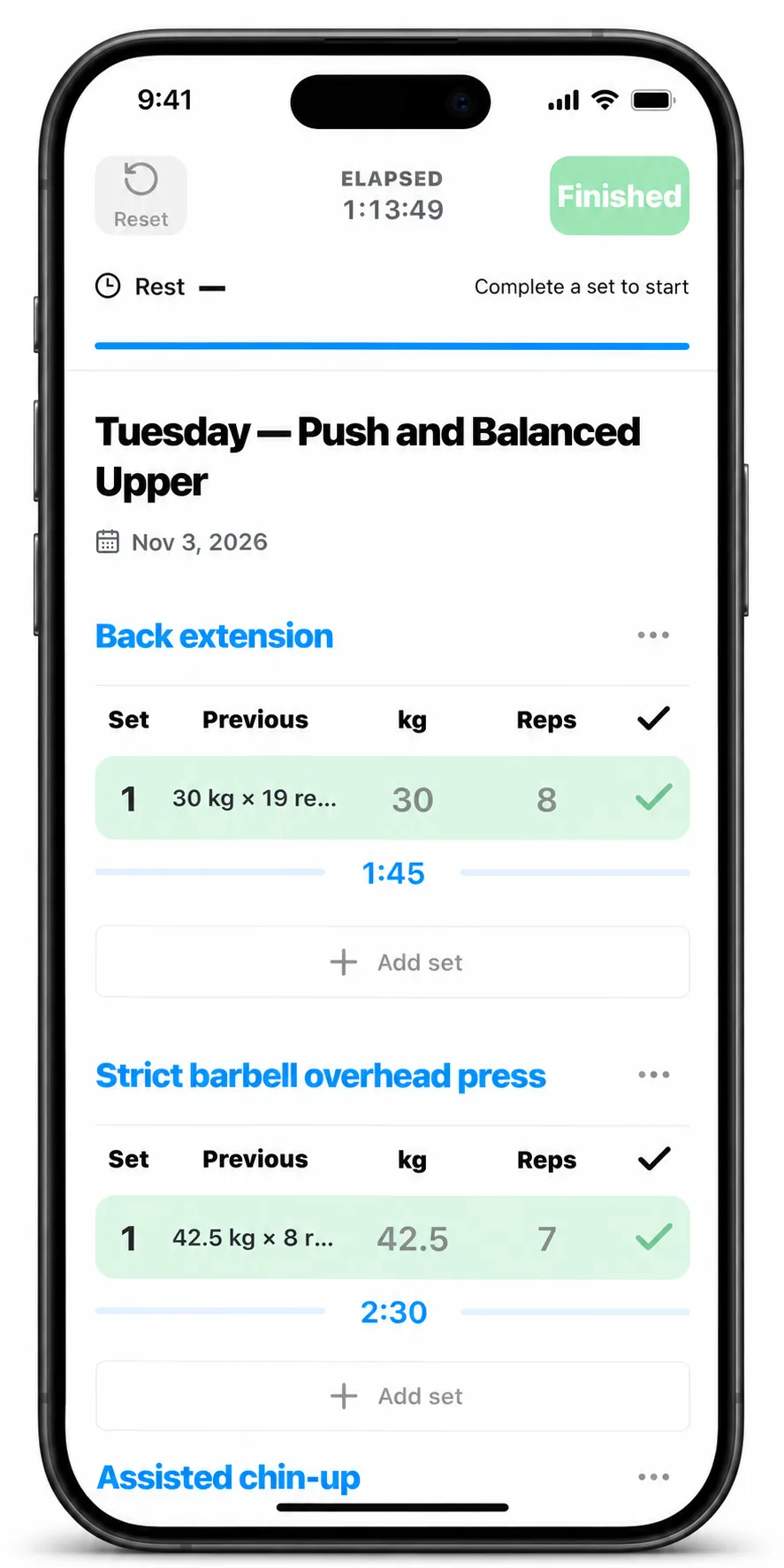
At the gym, I ask ChatGPT to start a workout. It reads the saved program and gives me a link to the session. I open that on my phone and record my sets, weights, and reps in a simple web app. Previous results are there for reference, and I can add notes about how an exercise or the whole session felt. Planning and discussion happen in chat; the workout screen is where I keep the record while I train.
That history accumulates across sessions. I can ask about my best sets, compare an exercise over time, or look back at a previous cycle. I can also import workouts from other apps, so the record can include training from before I started using this setup.
At the end of the cycle, I return to the conversation. Did I follow the program? Where did I make progress? Where did I stall? How did the workload feel? We can pull up the relevant sessions and compare what happened with what I intended. The log gives us weights, reps, and consistency; I bring the context of how I feel and whether I'm getting closer to the goal I chose.
Then we decide what to do with that evidence. Maybe the program is working and I keep going. Maybe we tune the progression, change the amount of work, or rewrite the program around a different priority. Once I ask ChatGPT to save the revision, it becomes the program for future sessions.
The next cycle starts with everything we learned from the last one. I still have to show up and do the training. The conversation helps me use that work to make the next decision.